
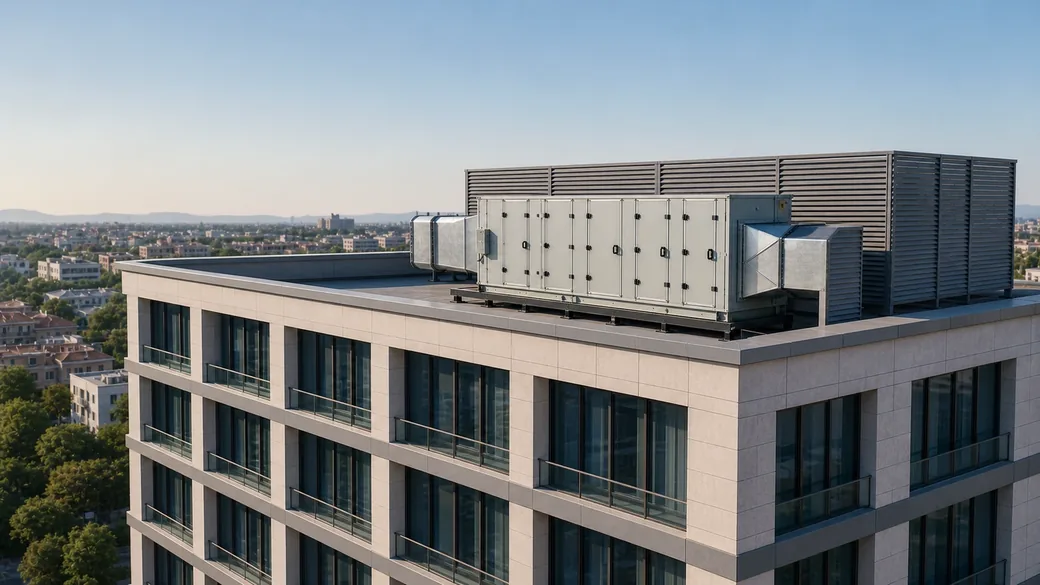
Fresh-air ventilation brings controlled outdoor air into occupied spaces and provides a route for air to leave. We design the supply around occupancy, room use, external conditions and the building’s heating and cooling systems. The objective is dependable air renewal with a practical balance between comfort, filtration, energy use and maintenance.
Outdoor air matched to real occupancy
Meeting rooms can have a very different occupancy pattern from an open office of the same size. We establish the relevant use, occupant numbers and operating schedule before calculating air volumes. The supply and extract balance is considered alongside doorways, transfer paths and pressure relationships. A carbon-dioxide sensor can support suitable occupancy-based control, but it is not a universal detector for every pollutant or a substitute for the design air requirement.
Equipment, filters and duct resistance
A fresh-air system may use an air handling unit, ducted supply fan or heat-recovery ventilation unit. Selection includes the external pressure requirement as well as airflow. Filters reduce the particles covered by their performance class; their clean and dirty pressure losses affect the fan duty. We coordinate filter access, dampers, silencers, intake protection and terminal distribution so that the equipment can be serviced without dismantling the installation.
Heat recovery with appropriate air separation
Where the project permits it, heat recovery transfers part of the extract air’s energy to the incoming outdoor air. Its suitability depends on the air streams, leakage characteristics, frost conditions and available operating mode. Contaminated kitchen or process extract cannot automatically be treated like office return air. Heating or cooling of the supplied air may still be required, and the controls should avoid opposing the room air-conditioning system.
Distribution that reaches the people using the space
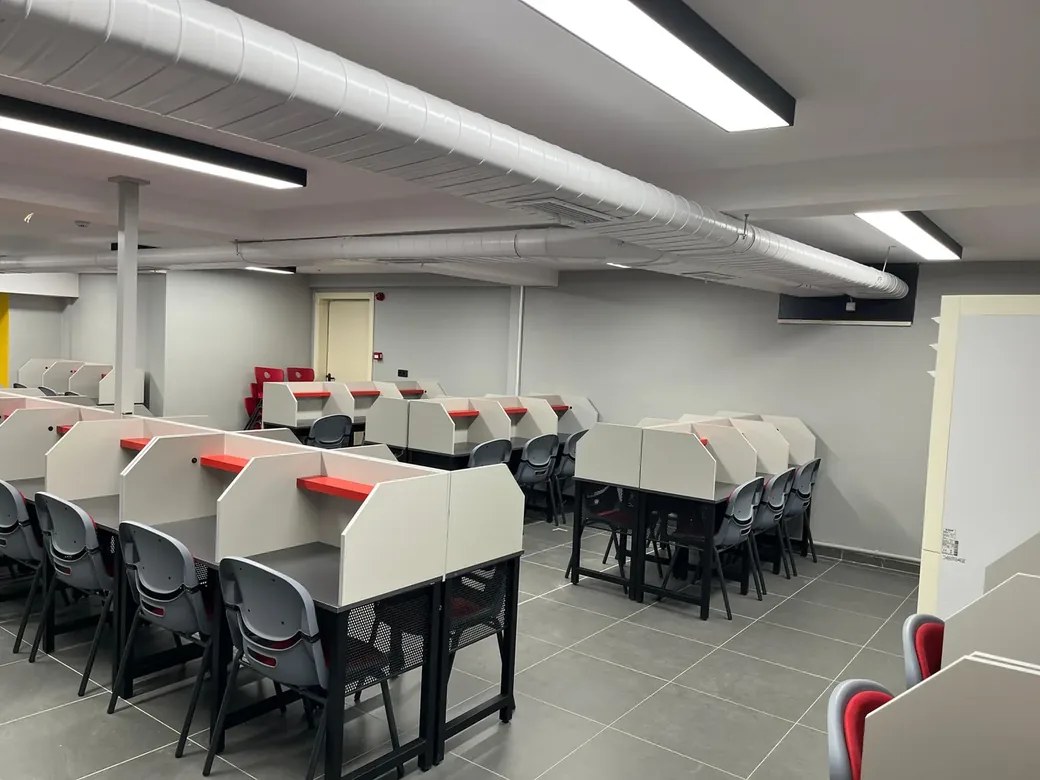
Correct total airflow does not guarantee comfortable distribution at every desk. We review diffuser placement, discharge direction, room geometry and local air speed. Duct and terminal noise are assessed for the occupied area. During commissioning, measured supply volumes and control settings are compared with the design, with particular attention to closed meeting rooms and rooms that have changed during fit-out.
Technical points we check
- Outdoor-air volume, occupancy variation and the route for extract or relief air.
- Filter class, pressure loss and safe replacement access.
- Heat-recovery suitability, frost protection and contamination limits.
- Airflow measurement, balancing and coordination with VRF or other cooling equipment.
From site survey to handover
We start by recording the space layout, occupancy, operating hours and existing equipment. We then coordinate air volumes, pressure losses, duct routes, intake and discharge positions, power supplies and maintenance access. After installation, we check the actual air distribution and control response against the agreed design. We explain filter access, operating schedules and maintenance responsibilities to the building team, so the installation can be managed after handover.
Frequently asked questions
Does more outdoor air always improve the system?
Air volumes should follow the building’s requirements. Excess supply can increase heating and cooling loads, noise and pressure imbalance. We determine a suitable design volume and verify that it reaches the intended spaces.
How often should filters be replaced?
There is no single interval for every building. Manufacturer instructions, operating hours, external conditions and measured pressure loss inform inspection and replacement. Access to the filter is part of the initial design.
Related solutions
Let's plan your project
Share your plans, existing equipment information and operating priorities with SCA Engineering. Our Istanbul-based team supports surveys, mechanical design, installation and commissioning across the Marmara region. We will clarify the technical scope and prepare a proposal suited to your building.
Discuss your project with SCA Engineering · Explore our completed projects
