
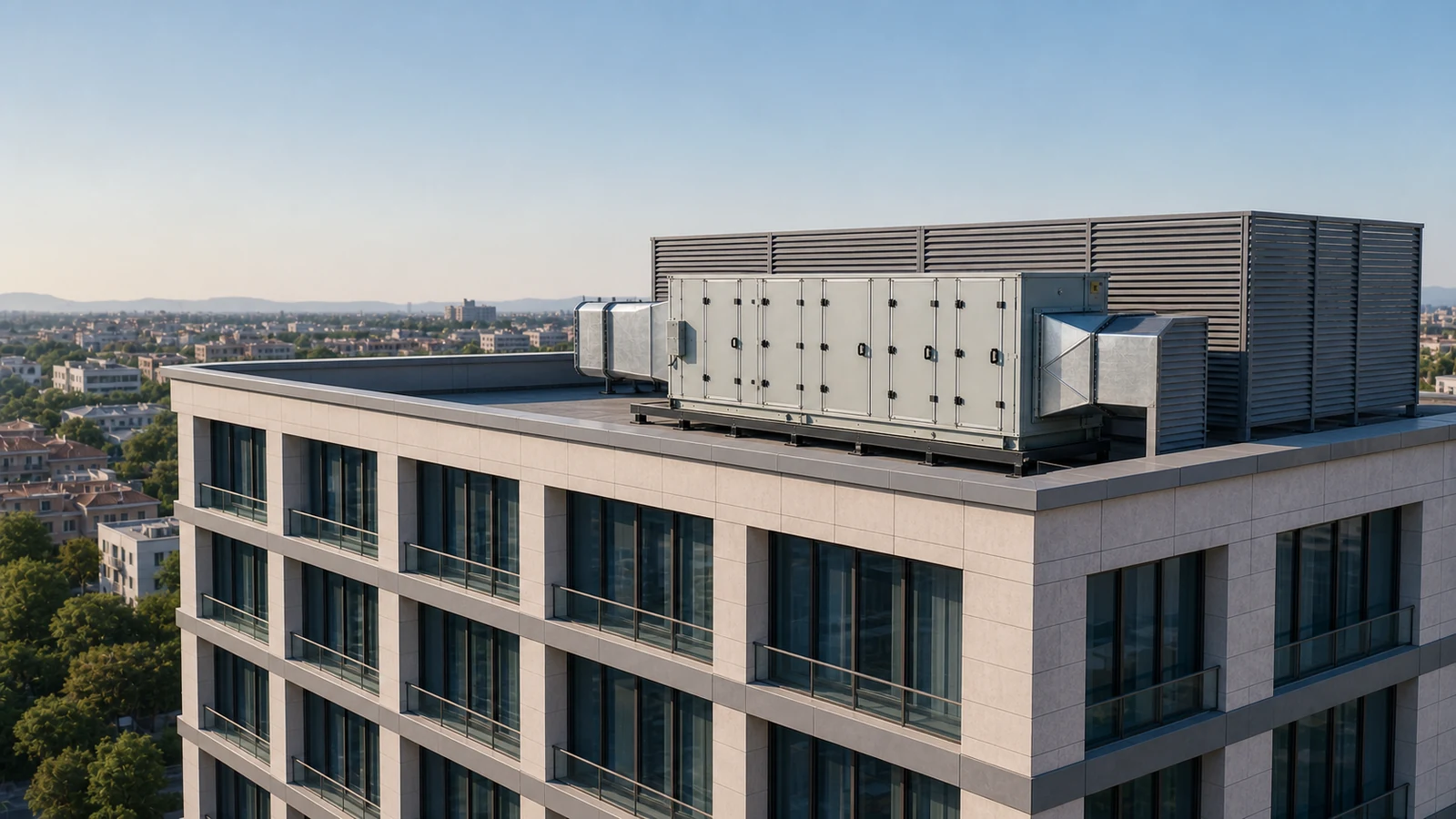
An air handling unit combines the air-treatment functions required by the project into a coordinated assembly. We assess outdoor air, filtration, heating, cooling, humidity control and suitable heat recovery with the duct network and controls. The selection follows the building’s use and maintenance needs rather than a fan-volume figure alone.
Choose the air-treatment arrangement
Fresh-air units, mixed-air units and heat-recovery assemblies perform different duties. Hygienic applications, pool dehumidification and DX-coil configurations require their own assessment of materials, air conditions and controls. These options should not be described as interchangeable products. We establish the supply-air requirement and permitted air streams first, then choose a section arrangement that can meet those conditions within the available plant space.
Filtration and pressure losses
Filter stages are selected for the air-quality requirement and the external conditions. Clean and dirty filter pressure losses affect fan selection and control. Coils, heat-recovery sections, dampers and the connected duct network add further resistance. We compare the fan’s operating point with the complete duty and coordinate safe access for inspection and replacement, including the direction in which filters and other components must be removed.
Coils, humidity and drainage
Heating and cooling coils must be selected for the specified entering-air and fluid conditions. Cooling can produce condensate, so the tray, drain and any required trap are coordinated with the unit pressure and installation layout. A pool or other humidity-sensitive application may require additional control functions. Water-side or refrigerant interfaces must be agreed with the plant supplier; fitting a coil does not by itself establish the complete capacity or control sequence.
Controls that connect the whole system
Fan control, temperature regulation, damper positions, frost protection and relevant alarms form a coordinated sequence. Heat recovery or bypass operation is assessed for the selected assembly. We also identify any fire-mode interfaces required by the building strategy. Commissioning compares air volumes and control response with the design, while the handover records service access and the maintenance requirements of each air-treatment section.
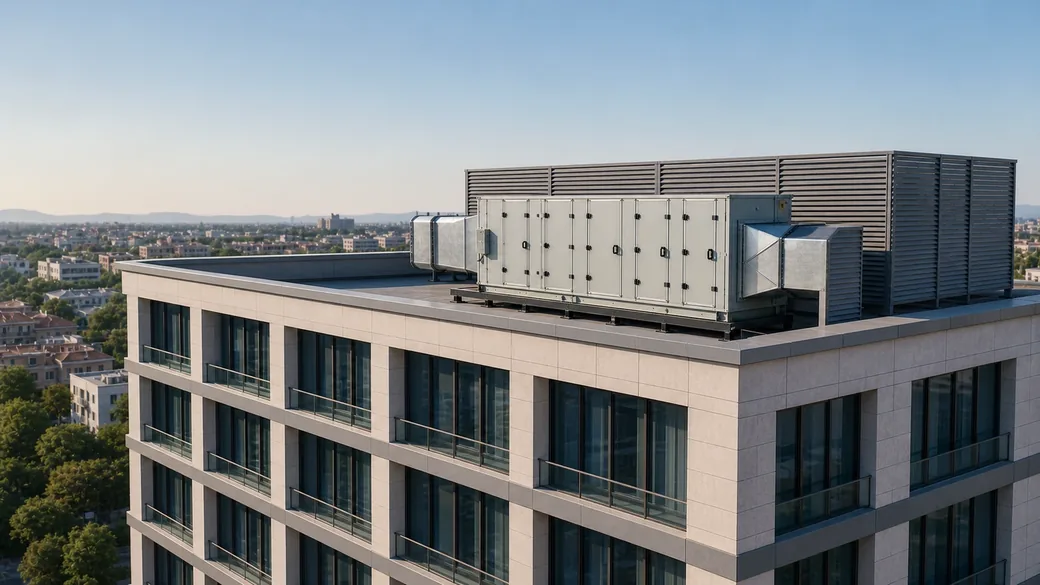
Technical points we check
- Outdoor-air duty, permitted recirculation and required treatment functions.
- Fan operating point with dirty-filter and external duct resistance.
- Coil conditions, condensate arrangements and service clearances.
- Control sequences, protection functions and air-volume measurements.
From site survey to handover
We coordinate the heat source, terminal units, pipework, air system, electrical supplies and controls as a complete installation. The agreed scope identifies who supplies each interface and which operating conditions will be verified. Commissioning records include the relevant flow, temperature, pressure and control checks. We hand over the final layout and equipment information with clear maintenance access and operating guidance for the facilities team.
Frequently asked questions
Are all air handling units suitable for hospitals or pools?
No. Hygiene or dehumidification applications require a specification suited to their conditions. Materials, access, treatment functions and controls must be selected and verified for the project.
Can an AHU be connected to VRF equipment?
Some projects use compatible DX-coil arrangements. The approved equipment combination, control interface and operating limits must be verified with the relevant technical documentation.
Related solutions
Let's plan your project
Share your plans, existing equipment information and operating priorities with SCA Engineering. Our team coordinates surveys, mechanical design, installation and commissioning around your project. We will clarify the technical scope and prepare a proposal suited to your building.
Discuss your project with SCA Engineering · Explore our completed projects
