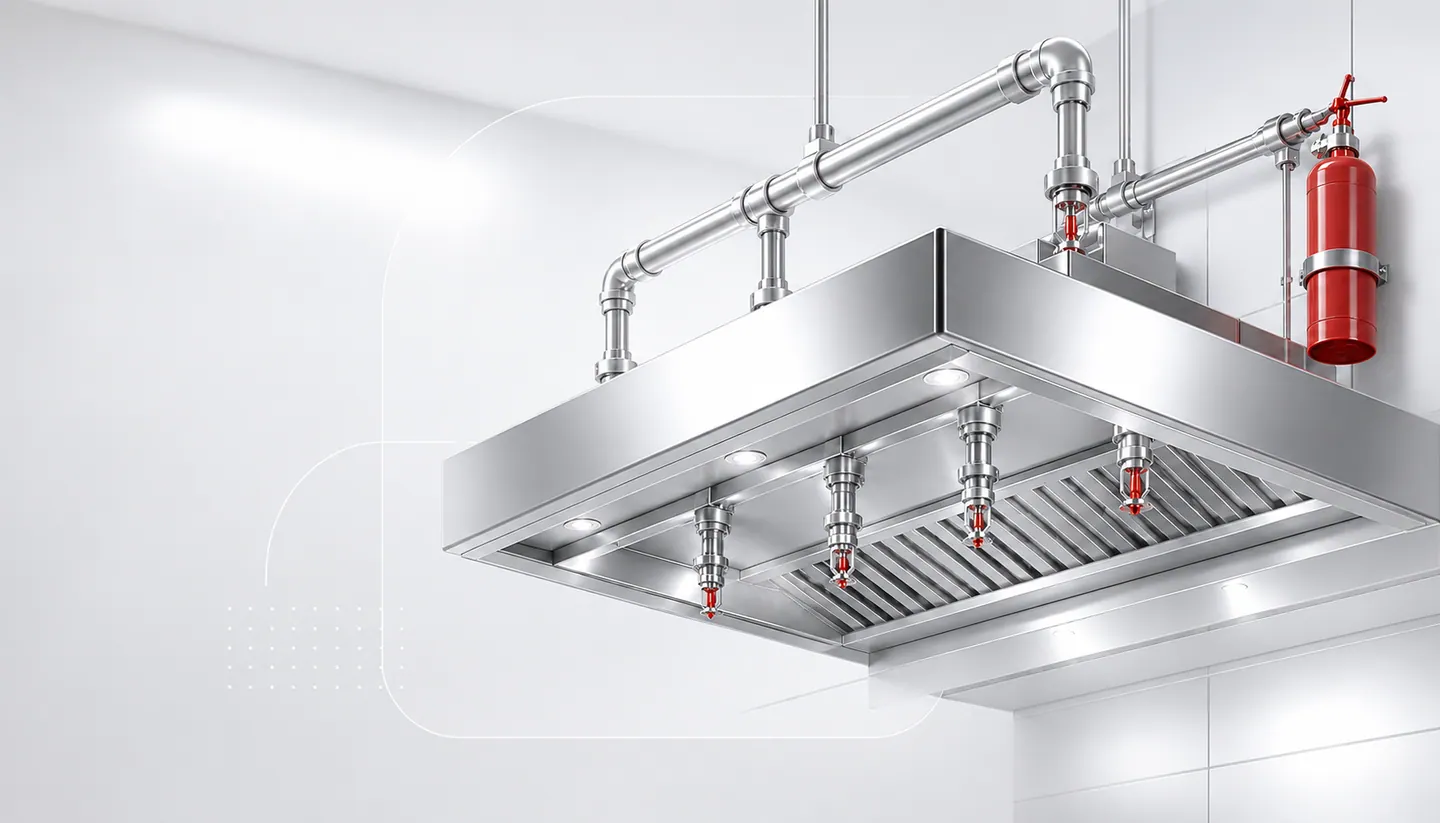
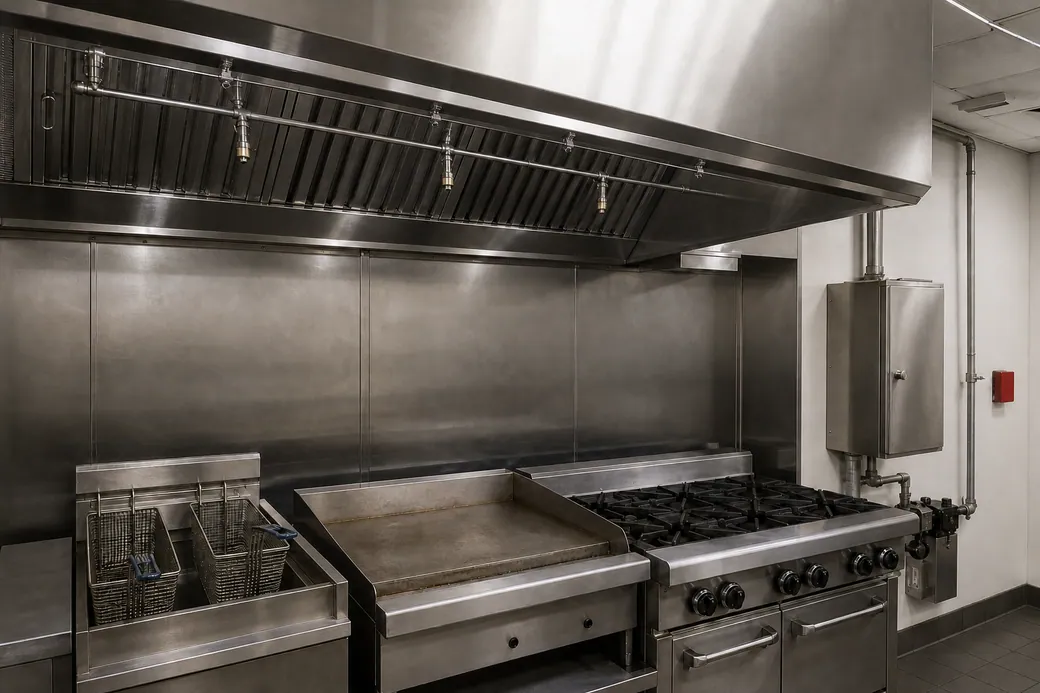
Kitchen hood suppression is coordinated with the actual cooking appliances, hood, plenum and extract duct. We assess the listed protection arrangement, detection and energy-isolation interfaces together. SCA Engineering develops the mechanical scope with the ventilation and electrical teams, including access for cleaning, maintenance and safe reinstatement.
Cooking-oil protection requires the right system
Cooking-oil hazards require an application-appropriate suppression system. An ordinary dry-powder extinguisher is not a substitute for a fixed hood system selected for its cooking equipment and protection limits. We record the appliance types, sizes and positions before choosing the product family and protection method. The hood, filters, plenum and duct are considered as distinct protected components where required by the selected system.
Approved nozzle positions rather than a head count
The nozzle’s role, location and orientation are matched to the appliance and the approved arrangement. Two installations with the same number of nozzles can have different protection coverage. Moving a fryer, adding a grill or changing the cooking line can invalidate the earlier layout. We compare the installed appliances with the suppression drawing and the relevant equipment instructions before accepting the modification.
Manual activation, energy isolation and fans
Manual activation, automatic detection, gas or electrical isolation and system feedback need coordinated checks. The fan response is defined by the selected suppression system and the approved fire scenario; we do not assume that every extract fan must stop in every application. Responsibilities for each interface are stated clearly so the installer, kitchen operator and maintenance teams know how the sequence is verified.
Cleaning, service access and return to operation
Agent-container position and nozzle access should allow the selected system to be inspected and serviced. Hood cleaning or duct alterations can disturb protection components, so the maintenance procedure includes relevant rechecks. After discharge, inspection, refill and reinstatement are planned through the appropriate service process. The kitchen’s return to use depends on the completed protection checks rather than the appearance of the agent container.
Technical points we check
- Cooking equipment identity, dimensions, arrangement and future changes.
- Approved appliance, hood, plenum and duct protection layout.
- Detection, manual activation, energy isolation and fan-response sequence.
- Service access and documented reinstatement after cleaning or discharge.
From site survey to handover
We begin with the protected hazard, occupancy, building layout and available infrastructure. The design documents define the selected system, equipment limits, detection and control interfaces, installation responsibilities and acceptance checks. Tests are planned with the building team so that isolations, alarms and reinstatement are controlled. We provide the agreed drawings, equipment records and operating instructions, including the changes that require the protection strategy to be reviewed.
Frequently asked questions
Can a fryer be moved without checking the suppression system?
The relocation may alter approved nozzle coverage. We compare the new position with the selected system’s requirements and update the protection arrangement when necessary.
Must the extract fan always stop during a fire?
The required behaviour depends on the selected system and approved scenario. It is defined and tested with the ventilation and electrical interfaces rather than assumed.
Related solutions
Let's plan your project
Share your plans, existing equipment information and operating priorities with SCA Engineering. Our Istanbul-based team supports surveys, mechanical design, installation and commissioning across the Marmara region. We will clarify the technical scope and prepare a proposal suited to your building.
Discuss your project with SCA Engineering · Explore our completed projects
