
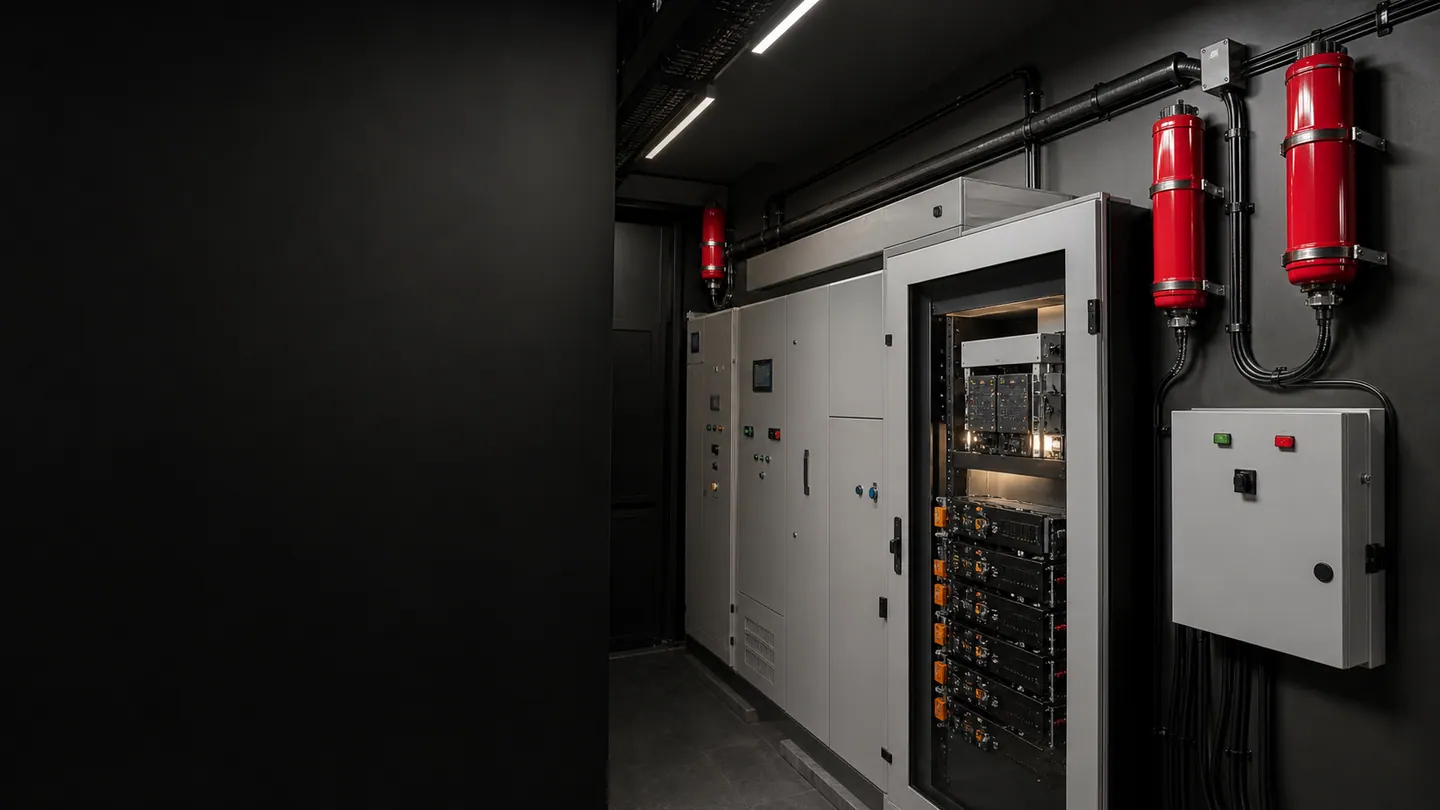
Fixed aerosol suppression is evaluated for the selected enclosure and hazard using the specific generator’s design limits. The technology differs from a clean-gas installation and requires attention to discharge clearances, openings and personnel conditions. We coordinate the generator arrangement, detection, ventilation interfaces and maintenance within an application-specific protection scope.
Aerosol is a distinct technology
Condensed aerosol systems produce a suppression aerosol rather than simply releasing a clean gas. Residue, discharge characteristics and compatibility with the protected equipment require their own assessment. We identify the product family and verified application before selection. A compact generator is not evidence that the technology can be applied without restrictions in every cabinet, electrical room or occupied enclosure.
Quantity depends on the enclosure
Generator quantity cannot be established from a room-volume figure alone. Height, openings, leakage, obstructions and the selected product’s installation limits are evaluated together. Equipment layouts and connected voids can affect the protected boundary. We compare the actual enclosure with the approved design method and record changes that could alter the required generator arrangement.
Clearances and ventilation interfaces
The specified distance around the discharge must be maintained in relation to equipment, surfaces and personnel. Generator positions should follow the product’s requirements rather than the most convenient mounting space. Ventilation, enclosure openings and any required shutdown are coordinated with the selected system. The detection and activation sequence is documented with clear responsibilities for the connected electrical and mechanical interfaces.
Access, inspection and reinstatement
Personnel presence requires a specific assessment of warnings, activation and access conditions. Service access is planned for the generator and control equipment. Following activation, the protected installation and suppression components must be inspected through the appropriate process before reinstatement. The handover identifies the cabinet or room changes that require the design to be reassessed, including added equipment or modified openings.
Technical points we check
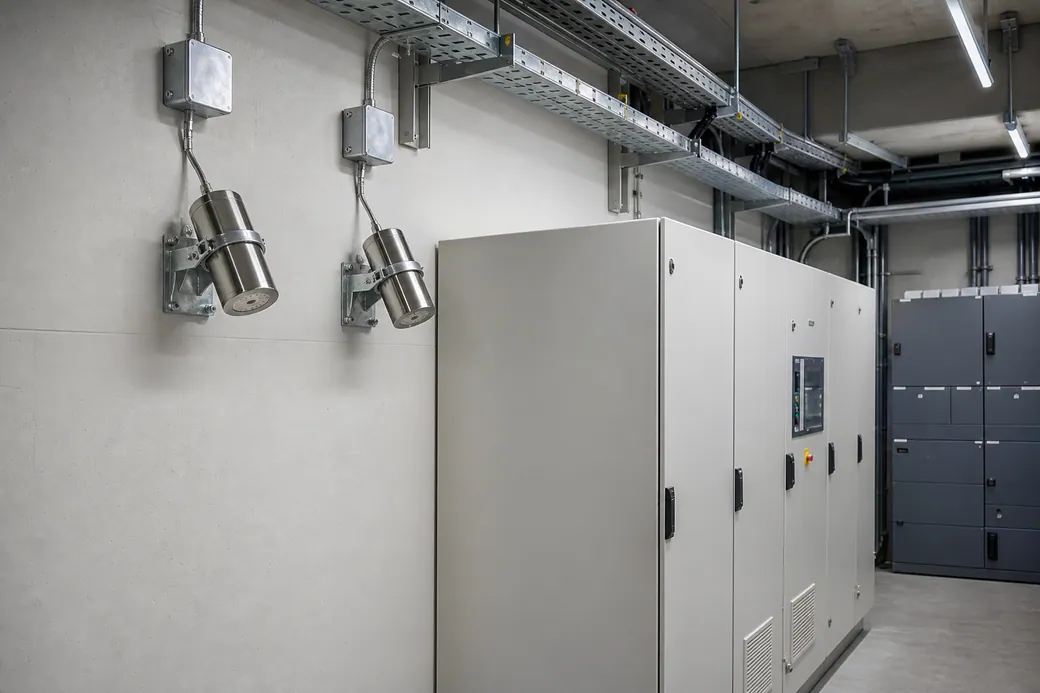
- Verified generator identity, application and protected-equipment compatibility.
- Enclosure volume, height, openings and the product’s design limitations.
- Discharge clearances and ventilation/control interfaces.
- Personnel conditions, service access and post-activation reinstatement.
From site survey to handover
We begin with the protected hazard, occupancy, building layout and available infrastructure. The design documents define the selected system, equipment limits, detection and control interfaces, installation responsibilities and acceptance checks. Tests are planned with the building team so that isolations, alarms and reinstatement are controlled. We provide the agreed drawings, equipment records and operating instructions, including the changes that require the protection strategy to be reviewed.
Frequently asked questions
Is aerosol suppression the same as clean-gas suppression?
No. It is a different technology with its own discharge, residue and application characteristics. The selected product’s suitability must be evaluated for the actual hazard and equipment.
Can generator size be chosen from room volume alone?
No. Enclosure geometry, openings, obstructions and approved product conditions also affect selection and placement. A complete application assessment is required.
Related solutions
Let's plan your project
Share your plans, existing equipment information and operating priorities with SCA Engineering. Our Istanbul-based team supports surveys, mechanical design, installation and commissioning across the Marmara region. We will clarify the technical scope and prepare a proposal suited to your building.
Discuss your project with SCA Engineering · Explore our completed projects
